
01
Create a private webhook URL
Hookly gives your phone a webhook endpoint you can paste into CI, monitoring, payment, and automation tools.
How it works
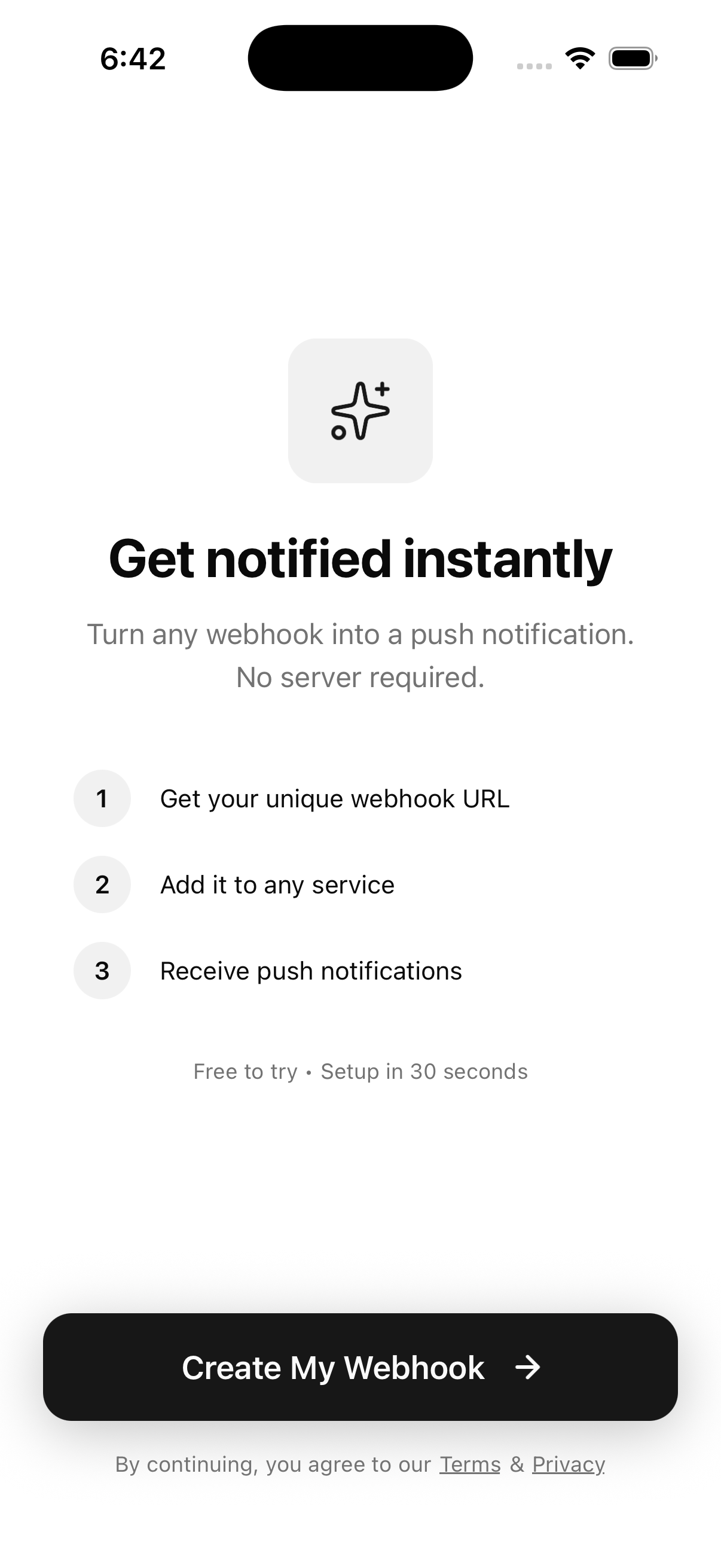
Hookly keeps setup intentionally simple: generate a webhook URL, then use it anywhere webhooks are supported.
Hookly gives your phone a webhook endpoint you can paste into CI, monitoring, payment, and automation tools.
Send a title and body with a POST request. No server to maintain, polling loop to write, or inbox to keep checking.
Hookly supports iOS and Android push notifications, so alerts land where you already notice them: your lock screen.
Alert sources
Hookly fits the tools that already run your work. It is useful for solo builders, on-call operators, founders, and anyone who wants important machine events on their phone.
Send release, rollback, and build-complete messages from GitHub Actions, GitLab, Cloudflare, Vercel, Netlify, Render, Railway, and similar tools.
Route Stripe, Shopify, RevenueCat, and app workflow events to your phone when a customer action needs fast awareness.
Turn uptime, queue, error, cron, and background-job signals into a lightweight personal alert stream.
Get notified when you have a new ticket, comment, escalation, or customer issue that needs a fast response.
Use any no-code or internal automation that can send a webhook, then keep the final notification on your phone.
Built for interruptions that matter
Hookly is edge-first infrastructure wrapped in a mobile app.
Hookly is built for moments when another dashboard, channel, or email filter is exactly what slows the alert down.
Generate a long-lived URL and just start using it.
FAQ
The basics for deciding whether Hookly belongs in your deploy, monitor, or automation path.
Hookly is a mobile app and webhook endpoint that turns HTTP POST requests into push notifications on iOS and Android.
No. If your tool can send a webhook, paste in your Hookly URL. Developers can also trigger alerts directly with curl or any HTTP client.
Hookly supports iOS and Android push notifications.